Open by choice

A control system should last twenty years. The relationship with whoever installed it often lasts much less. If the system is closed and the only authorised installer closes down, the system is left with nobody who can work on it.
It is a story we hear often, with small variations. Ten years ago a small hotel installed a system to manage its rooms and heating. The system came from a well-known brand, the installer was the local authorised partner, and everything worked well. Then the installer retired, or closed, or stopped working with that brand. The first fault came in the middle of winter.
The manager discovered that no other installer in the area was authorised. The configuration software could not be bought. The system’s configuration was on the computer of an installer who was no longer around. There were two options: call in a partner from far away, at a high price, or redo the controls from scratch.
This is vendor lock-in in building automation: the tie that binds a system to a supplier, and not by the client’s choice.
The lock-in does not come from bad intentions. It comes from technical and commercial choices that, taken one by one, have their own logic.
For the manufacturer these are ways to ensure installation quality and protect its work. For the client, in the long run, they become a cost and a risk.
The cost of lock-in appears in no quote. It shows up later, in four ways.
We put numbers on this in the article on the ten-year cost of a control system: lock-in is often the biggest item, and the least visible.
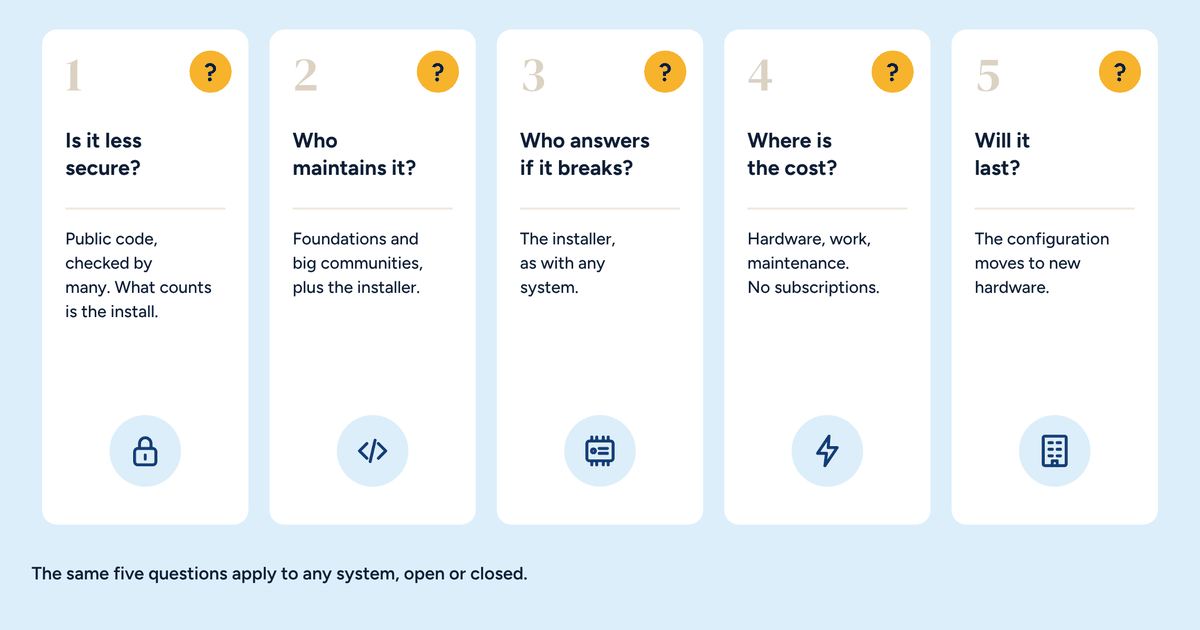
Five questions help you judge how open a system is, whatever the brand.
If the answers are “only us”, “no”, “no”, “no” and “yes”, the system is closed. That is not necessarily a bad choice, but it is one to make knowingly.
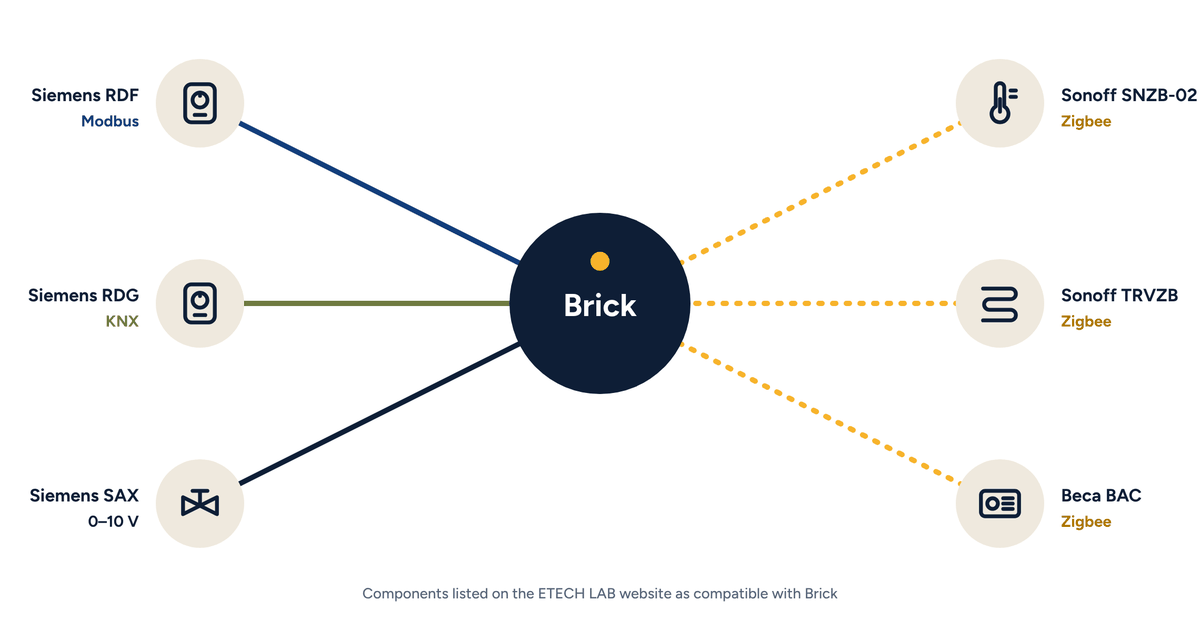
Brick is built not to tie anyone down. The software is free: Linux, Home Assistant, Node-RED and Grafana, as we explained in the article on Brick’s free software. The protocols are open: Modbus, KNX, Zigbee. The compatible components come from different, widely available brands.
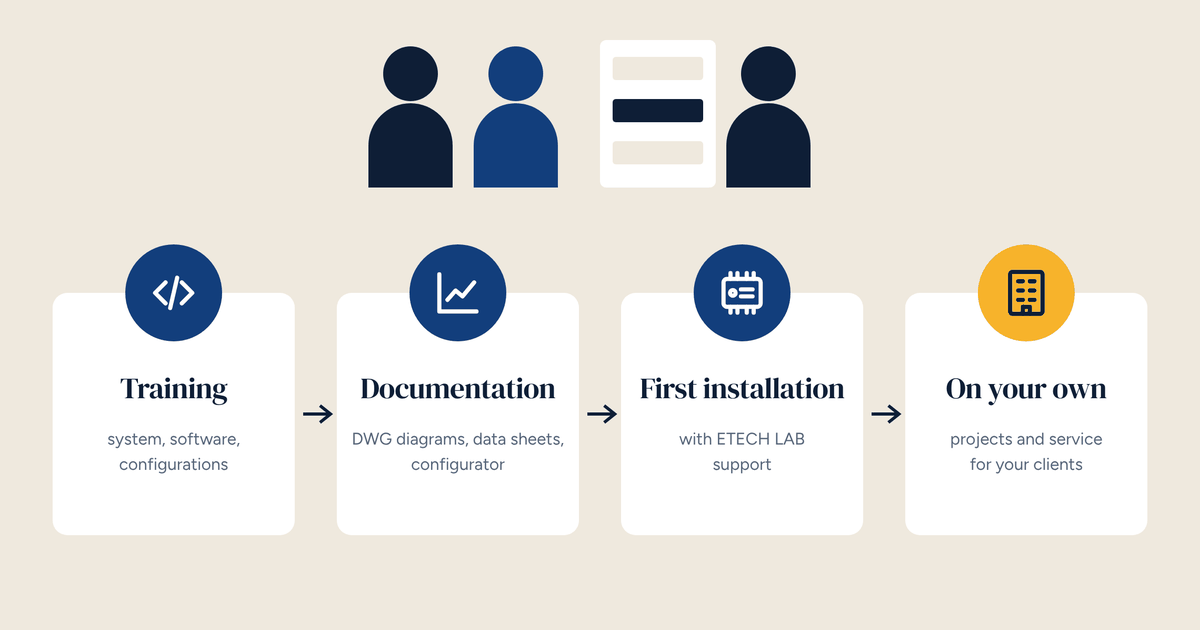
But open software is not enough on its own. The new integrator has to find what they need. So every Brick system is handed over with:
With these, any integrator who knows Home Assistant can take over the system within a few hours, without asking anyone’s permission, not even ours.
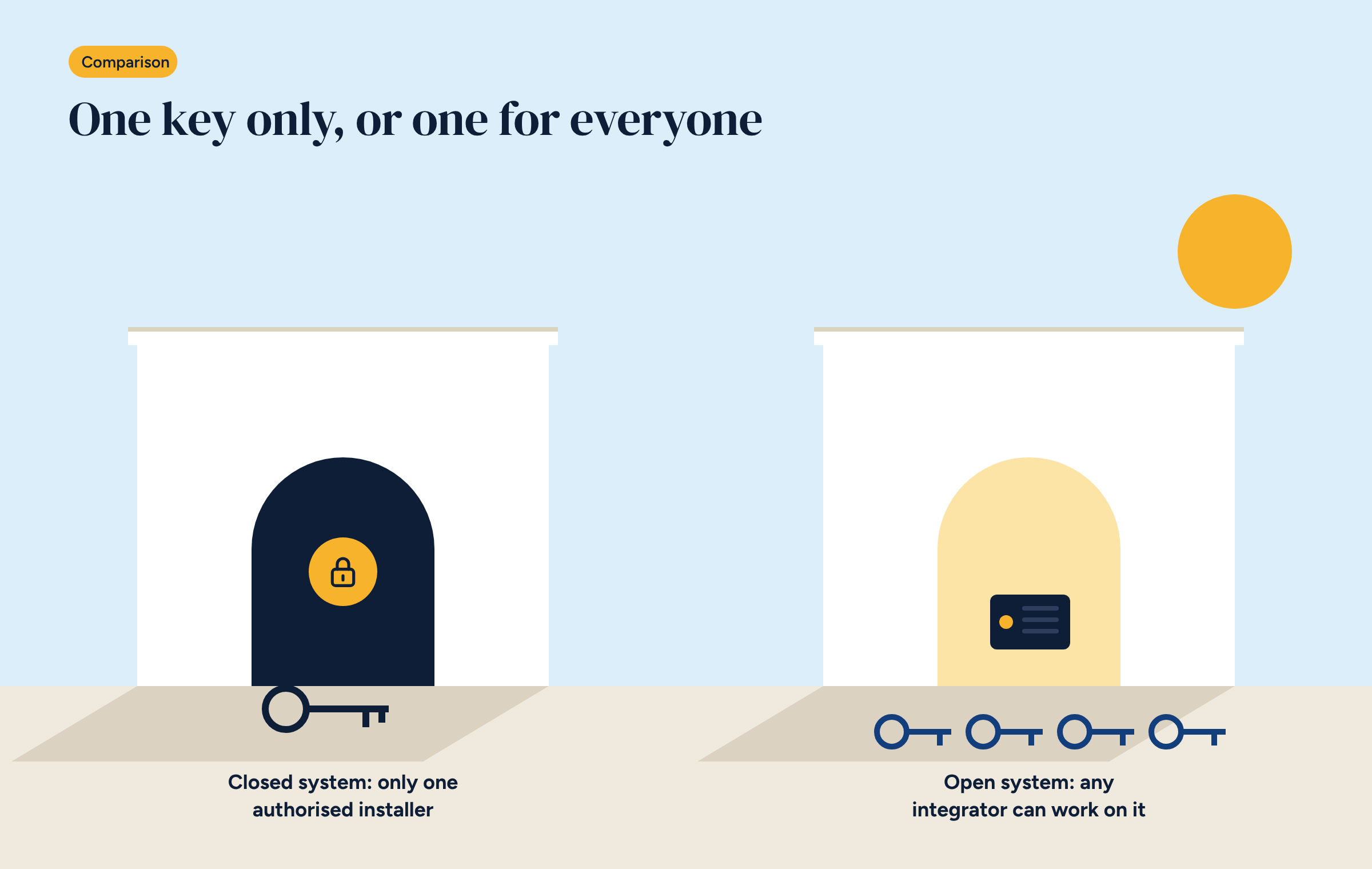
One key only, held by the authorised installer, against one key for everyone: an open system can be entrusted to whoever you choose. It is the message for decision-makers, owners, managers and engineers, more than for technicians. For them the question is not which protocol the system uses, but who will be able to work on it in ten years’ time.
If you already have a closed system, you don’t have to throw it away. But it pays to act before the next fault.
Often the best route is gradual: keep what works and move what needs renewing onto an open system.
When writing a specification, freedom of choice can be required explicitly, without naming brands:
For public bodies these requirements make particular sense: a system that can be entrusted to any contractor can be managed through normal maintenance procurement, without depending on a single supplier for its whole life.
One last clarification. An open system is not one where anybody changes whatever they like. Changes are documented, safety functions are left alone, access is personal. The difference is that the rules are set by whoever owns the system, not by whoever sells it. It is the same principle we described in Home Assistant in a professional installation.
Brick uses free software and open protocols, and every system is handed over with its diagrams and configuration. See how we work with installers.